
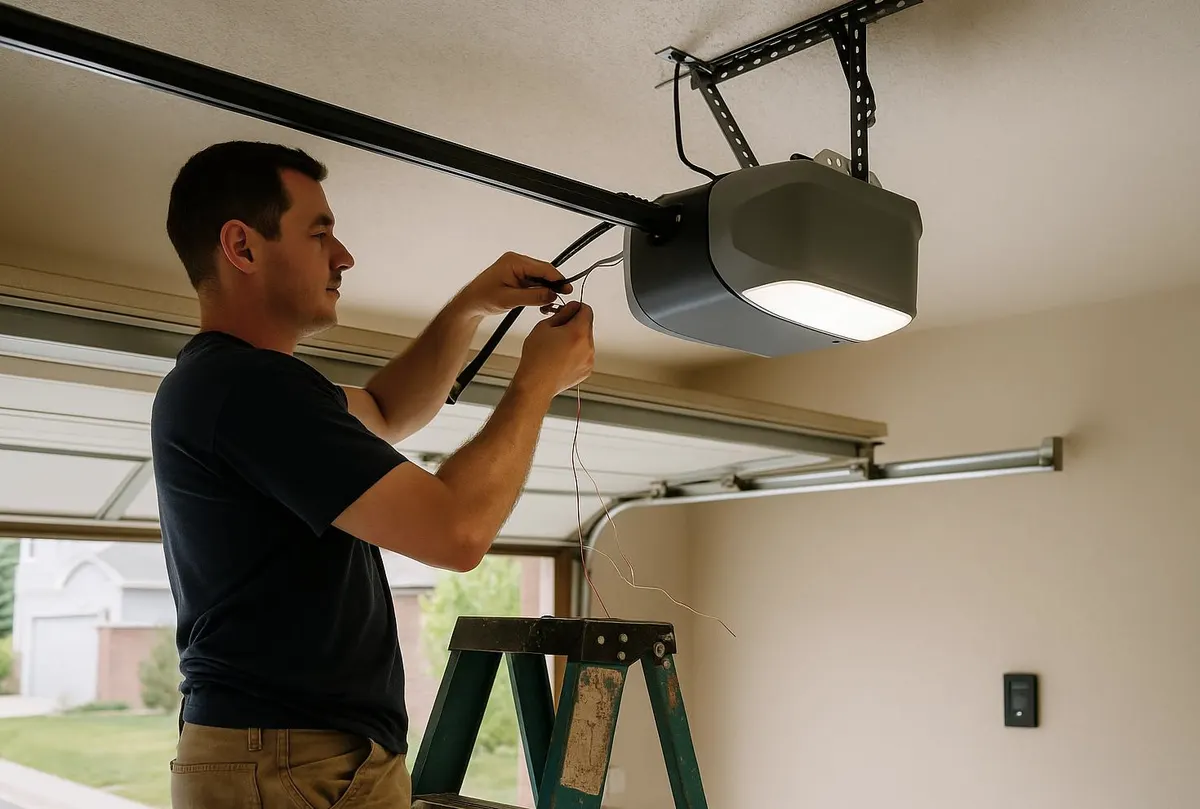
The 6 a.m. Grind That Gets Everyone's Attention
You hit the button on your way to work and instead of the usual smooth hum, the opener lets out a metallic clank-clank-clank that rattles the wall studs and wakes up everyone still asleep upstairs. Or maybe it's the opposite problem: the motor runs, the light comes on, but the door just sits there, and you can hear something straining under the hood that wasn't straining last winter. Either way, that's usually the moment people start Googling opener types instead of just living with the noise.
If you're at that point, it helps to know what you're actually choosing between. Garage door openers come in four main drive types, and the differences matter a lot more once you factor in an attached garage, an older wood door, and a Jersey winter.
Chain Drive
A metal chain pulls the trolley along the rail, the same basic design that's been around for decades. It's the loudest option by a wide margin—every pull transmits through the chain and the rail into the garage ceiling, and if that ceiling is also your bedroom floor, you'll hear it.
- Noise: Loudest of the four, especially as the chain stretches with age.
- Price: Cheapest, typically in the lower end of national price ranges for openers.
- Lifespan: Solid, often 10–15 years with regular lubrication.
- Trade-off: Handles heavy doors well, which matters for the solid wood doors still on a lot of older homes in this area, but metal-on-metal parts are more exposed to rust once road salt and winter moisture work their way into the garage.
Belt Drive
Same basic mechanism as a chain drive, but the chain is replaced with a reinforced rubber belt. It's noticeably quieter because there's no metal clanking against metal.
- Noise: Quiet—usually the top pick when the garage shares a wall or ceiling with living space.
- Price: A bit more than chain drive, mid-range overall.
- Lifespan: Comparable to chain drive, 10–15 years, though belts can stiffen slightly in very cold weather.
- Trade-off: Less resistant to rust-related wear than chain drives, which is actually an advantage here given salty winter runoff, but belts occasionally need tension checks that a lot of homeowners skip.
Screw Drive
The trolley rides along a threaded steel rod instead of a chain or belt. Fewer moving parts mean less to maintain, and the mechanism is simple and durable.
- Noise: Moderate—quieter than chain, not as quiet as belt.
- Price: Mid-range, similar to belt drive.
- Lifespan: Good, but performance is more sensitive to temperature swings than the other types. In a garage that isn't insulated, the lubricant on the screw can thicken in deep cold, slowing the door down right when you need it to open fast during a nor'easter.
- Trade-off: Low maintenance most of the year, but needs the right lubricant for our freeze-thaw winters or it'll feel sluggish from December through February.
Direct Drive
Instead of a trolley moving along a fixed rail, the motor itself travels along a stationary chain embedded in the rail. There's only one moving part, which is why this design tends to be the quietest and longest-lasting.
- Noise: Quietest option available, often barely audible from inside the house.
- Price: Highest upfront cost of the four.
- Lifespan: Excellent—fewer parts to wear out means less maintenance and a longer service life overall.
- Trade-off: You pay more at install, but you're also not replacing chains, adjusting belts, or troubleshooting rust on moving parts down the road.
What Actually Makes Sense for a Home Around Here
A lot of the housing stock in this part of Camden County has attached garages with a bedroom or living space directly above or beside them, plus original doors that are heavier than what's typically installed today. That combination usually points toward a belt drive or direct drive opener: both are quiet enough not to wake anyone during an early morning or late-night opening, and both hold up reasonably well against the humidity, road salt, and freeze-thaw cycles that are hard on exposed metal parts.
Chain drive still earns its keep in detached garages or workshops where noise isn't a concern and budget is the priority—it's the most forgiving option for pulling a heavy old wood door without straining the motor. Screw drive is a reasonable middle ground, but if your garage is uninsulated, plan on a winter-rated lubricant or you'll notice it slowing down on the coldest mornings.
When to Call Clementon Garage Door
If your current opener is grinding, slipping, or struggling to lift the door—especially as colder weather sets in—it's worth having it looked at before it fails completely on an icy morning. Clementon Garage Door handles both Garage Door Opener Repair & Installation and Garage Door Maintenance, so whether you need a quick fix, a full upgrade to a quieter belt or direct-drive system, or a pre-winter tune-up to catch wear before the freeze-thaw cycle makes it worse, we can take care of it in one visit.
If you're in Clementon, NJ or anywhere nearby, give us a call and we'll help you pick the right opener for your garage and get it installed before the next cold snap.