
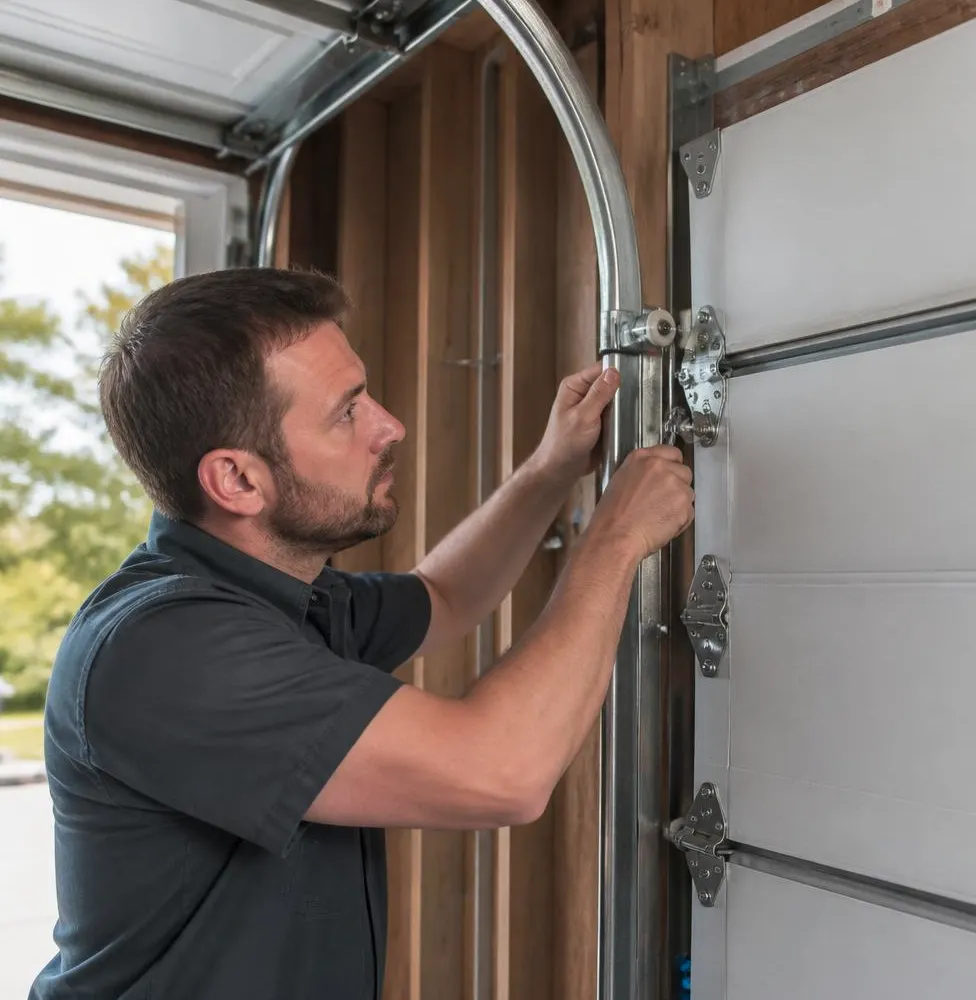
Most homeowners' first move when the weather turns is to grab a can of spray lubricant and hit every moving part on the garage door, then call it done for the season. It's a tempting fix because it's cheap, fast, and the door usually does sound quieter right after. The problem is that the wrong lubricant, sprayed in the wrong places, can actually attract grit and road salt residue through the winter, turning into a gummy paste on your tracks and hinges by January. If your home has its original door from decades back, as many do in this area, that buildup accelerates wear on parts that are already past their prime.
Why This Stretch of New Jersey Is Hard on Garage Doors
Winters here aren't just cold, they're wet-cold. Snow melts on a sunny afternoon, runs under the door, and refreezes overnight. That freeze-thaw cycle is brutal on weatherstripping, door bottoms, and any metal hardware that isn't properly protected. Add in salt from driveways and the roads along routes like the White Horse Pike tracking into the garage on tires and boots, and you've got a slow corrosion problem that shows up as rust on springs, tracks, and bolts by spring. Nor'easters bring wind-driven snow that finds every gap in an aging seal, and the humidity swings between summer and winter mean wood-paneled doors expand and contract more than owners expect.
Start With the Weatherstripping, Not the Lubricant
Before you oil anything, look at the rubber seal along the bottom of the door and the vinyl stripping around the sides and top. If it's cracked, flattened, or pulling away from the frame, cold air and moisture are getting in no matter what else you do. Weatherstripping is inexpensive and straightforward to replace, and doing it now, before the first hard freeze, is far easier than trying to pry out brittle rubber when it's 20 degrees out. This step alone does more for keeping snowmelt and drafts out than most of what people spend money on later.
Check the Door Bottom Seal for Ice Damming
Pay special attention to the bottom seal if your driveway slopes toward the garage at all. Water that pools there and freezes can actually lift the door slightly or freeze it shut overnight. A proper seal with no gaps reduces this, but you may also want to keep a small bag of ice melt or a bucket of sand near the garage door for mornings when the bottom edge has frozen to the concrete.
Inspect Springs and Hardware for Rust Before It Spreads
Torsion springs and the hardware holding tracks to the frame take a beating from humidity and salt exposure over years. Look for surface rust, especially where coils touch each other or where bolts meet brackets. A little surface rust isn't an emergency, but flaking rust or a spring that looks pitted is a sign it's weakened and more likely to snap under the added strain of cold weather, since metal contracts and gets more brittle in low temperatures. Springs are under serious tension and are not a safe DIY repair, so if yours look compromised, that's a job to schedule rather than ignore.
Lubricate the Right Parts, the Right Way
Once weatherstripping and hardware are sorted, a silicone-based garage door lubricant on the rollers, hinges, and torsion springs (not a general all-purpose oil, which attracts dust and grime) will help parts move smoothly through cold snaps. Avoid spraying the tracks themselves; they should stay clean and dry, not greasy, or you'll just be collecting salt and dirt there instead.
Test the Auto-Reverse and Opener Before You Need It
Cold weather is hard on garage door openers, particularly older chain-drive units in unheated garages. Batteries in remotes and keypads drain faster in the cold, belts can stiffen slightly, and sensors can get knocked out of alignment by seasonal cleaning or stored holiday decorations. Test the auto-reverse safety feature by placing a block of wood in the door's path and making sure it reverses on contact. Do this now, not during the first snowstorm when you actually need the door to work reliably.
Clear the Photo-Eye Sensors
Snow, ice, and condensation can coat the small sensor eyes near the bottom of the tracks. If they're blocked or frosted over, the door won't close, or it'll reverse unexpectedly. Wipe them down regularly through the winter, not just once in November.
Look at the Door Panels Themselves
Older original doors, especially wood or wood-composite panels common in this area's housing stock, are vulnerable to moisture intrusion at the seams and bottom edge. Check for soft spots, peeling paint, or gaps where water could seep in and freeze, expanding the damage. A fresh coat of exterior paint or sealant before the cold sets in buys you another season, but if the wood is already soft or delaminating, patching won't hold through a real nor'easter.
When to Call Clementon Garage Door
If you're seeing rust on the springs, a door that's noticeably harder to lift by hand, or weatherstripping that's too brittle to replace yourself, it's worth having it looked at before winter rather than during an emergency. Clementon Garage Door offers garage door maintenance visits that cover exactly this kind of seasonal inspection, checking springs, hardware, and seals so small issues don't turn into a stuck or broken door in the middle of a storm. If a spring does fail, our garage door spring replacement service handles it safely and gets the door back in working order without you needing to touch the tensioned hardware yourself.
If you're in Clementon, Lindenwold, Pine Hill, Gibbsboro, Laurel Springs, Stratford, Hi-Nella, or Berlin and want your garage door checked before the next cold snap, give Clementon Garage Door a call. We're local, we show up on time, and we'll get it sorted before the next freeze.